How to Choose Clothing Sizes That Fit Online


How to Choose Clothes That Fit Well When Shopping Online
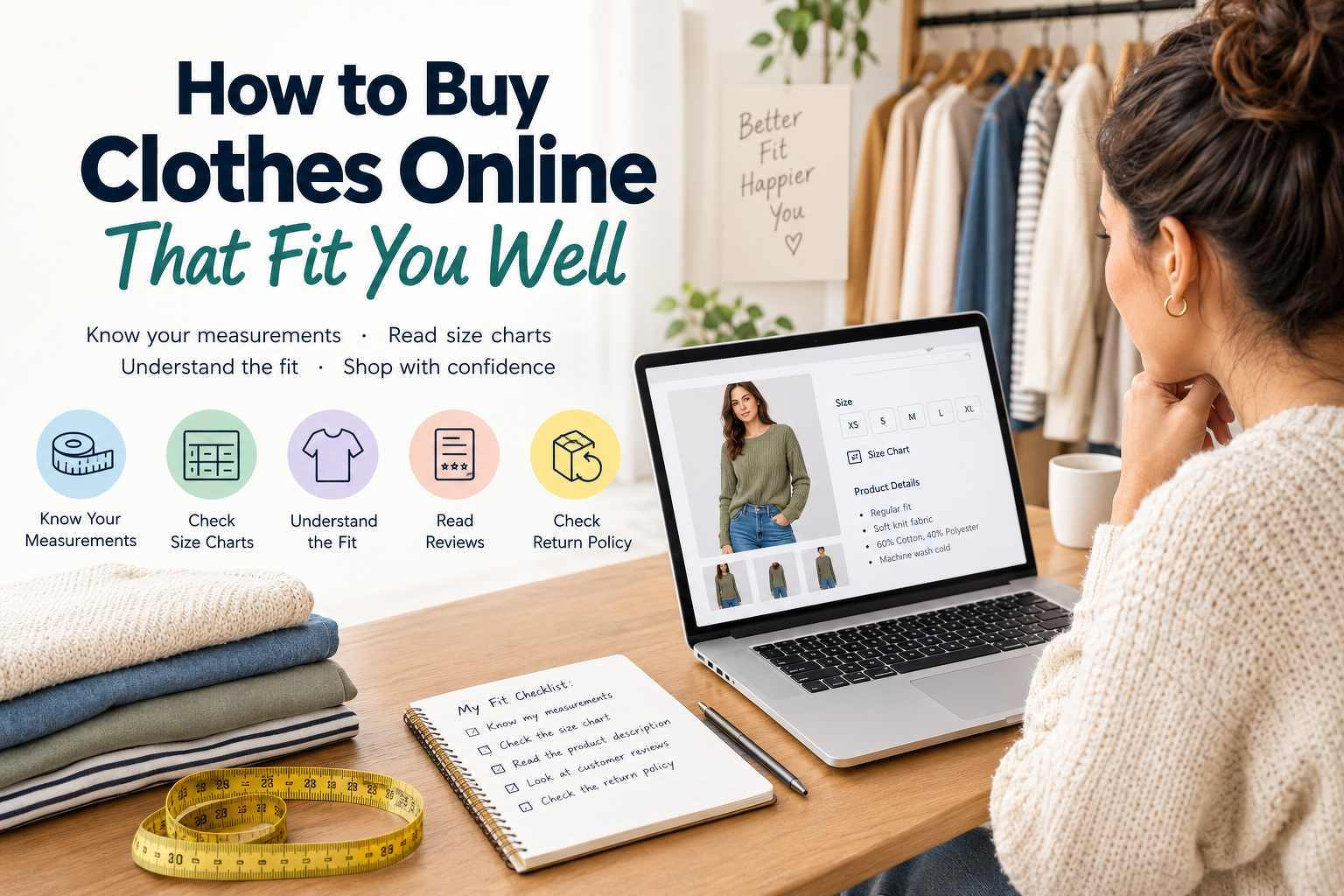
Learn How to Buy Clothes Online That Fit You Well with simple sizing tips, measurement guides, and smart shopping strategies. Buying clothes online is convenient, but finding pieces that fit well can sometimes feel like a guessing game. Unlike shopping in a physical store, you cannot try on a shirt, pair of pants, jacket, dress, or pair of leggings before placing your order. Product photos can also make clothing look different depending on the model, lighting, styling, and camera angle.
The good news is that you can dramatically improve your chances of getting the right fit by using a consistent approach. Understanding your measurements, reading size charts, checking garment measurements, studying product descriptions, and paying attention to fabric composition can make online clothing shopping much more predictable.
Whether you are shopping for everyday basics, activewear, streetwear, workwear, or fashion pieces, this guide explains how to buy clothes online that fit you well.
Why Online Clothing Fit Can Be Difficult
Clothing sizes are not completely standardized. A medium from one brand may fit differently from a medium from another brand. Even within the same store, different product categories can have different cuts and sizing.
Several factors affect how a garment fits:
Brand-specific sizing
Garment cut and silhouette
Fabric stretch
Fabric weight
Construction and tailoring
Intended fit
Your body measurements
Manufacturing tolerances
Differences between countries and sizing systems
For example, a relaxed-fit T-shirt is designed to provide more room than a slim-fit T-shirt in the same nominal size. Similarly, compression leggings are designed to fit much closer to the body than casual leggings.
This is why relying only on your usual size is not always enough.
1. Know Your Measurements Before You Shop
One of the most important steps when buying clothes online is knowing your current body measurements.
You do not need a complicated measuring system. A flexible measuring tape and a few minutes are usually enough.
Depending on what you are buying, useful measurements can include:
Chest or bust
Waist
Hips
Shoulder width
Sleeve length
Inseam
Outseam
Torso length
Height
For tops, chest or bust measurements are particularly useful. For pants, waist, hips, and inseam measurements can be more important.
For dresses and fitted garments, you may need several measurements to determine the most appropriate size.
How to Measure Your Chest or Bust
Wrap the measuring tape around the fullest part of your chest or bust. Keep the tape level around your body without pulling it excessively tight.
The tape should rest comfortably against your body rather than compressing it.
How to Measure Your Waist
Measure around the natural waist or the area specified by the retailer’s size guide.
Do not hold your stomach in while measuring. Stand naturally and keep the tape comfortably against your body.
How to Measure Your Hips
Measure around the fullest part of your hips and seat. Keep the tape horizontal for the most consistent result.
How to Measure Your Inseam
For pants and leggings, inseam length can be especially useful.
Measure from the crotch area down to the bottom of the leg along the inside seam. If you already own pants with a length you like, measuring those pants can also provide a useful reference.
2. Always Check the Brand’s Size Chart
Never assume that your usual size will automatically work.
Before ordering, find the specific product’s size chart and compare it with your measurements.
A size chart may include measurements such as:
XS
S
M
L
XL
XXL
3XL
However, the numerical measurements associated with these sizes can vary substantially between brands.
For example, one company’s medium may correspond to a different chest or waist measurement than another company’s medium.
Body Measurements vs. Garment Measurements
This distinction is important.
A body measurement chart tells you which body measurements correspond to each size.
A garment measurement chart tells you the dimensions of the finished clothing item.
These are not interchangeable.
If a retailer provides garment measurements, check how the measurements were taken before comparing them with your body measurements.
3. Measure a Garment You Already Own
One of the easiest ways to understand online sizing is to compare a new item with clothing you already own and like.
Take a T-shirt that fits you particularly well and measure:
Chest width
Shoulder width
Body length
Sleeve length
For pants, you can measure:
Waist width
Rise
Inseam
Leg opening
Overall length
Then compare these measurements with the retailer’s product specifications when available.
This approach can be particularly helpful because you are comparing the new item against a real garment that already fits your preferences.
4. Understand the Difference Between Slim, Regular, Relaxed, and Oversized Fits
The label describing the fit can tell you a lot about how a garment is intended to sit on your body.
Slim Fit
Slim-fit clothing generally has a closer silhouette and less excess fabric.
It can be useful when you prefer a streamlined appearance, but you should pay closer attention to measurements because there is less room for sizing differences.
Regular Fit
Regular-fit clothing generally provides a balanced amount of room without being especially tight or oversized.
This is often a versatile choice for everyday clothing.
Relaxed Fit
Relaxed clothing is designed with additional room through areas such as the chest, torso, sleeves, thighs, or legs.
The same numerical size may therefore look substantially larger than a slim-fit version.
Oversized Fit
Oversized clothing intentionally uses a larger silhouette.
If an item is specifically designed as oversized, ordering a larger size is not necessarily necessary. The intended proportions may already be built into the garment.
This is one reason why simply “sizing up” can sometimes produce a different look than intended.

5. Pay Attention to Fabric Composition
Fabric can have a major impact on fit.
A garment made primarily from cotton may behave differently from one containing elastane or other stretch fibers.
Common materials include:
Cotton
Polyester
Nylon
Elastane
Viscose
Rayon
Linen
Wool
Modal
Stretch fabrics can provide more flexibility around the body. This can be particularly relevant for leggings, activewear, fitted tops, and other garments designed for movement.
However, stretch does not mean that every size will fit everyone. A garment still needs to have appropriate dimensions.
6. Understand Stretch and Recovery
For stretch clothing, two characteristics are particularly important: stretch and recovery.
Stretch describes how much the fabric can expand.
Recovery describes how well the fabric returns toward its original shape after being stretched.
Good recovery can help clothing maintain its intended shape during repeated movement and wear.
This matters for products such as:
Leggings
Yoga pants
Performance tops
Cycling apparel
Fitted dresses
Stretch jeans
Athletic shorts
When shopping online, look for product descriptions that explain the fabric’s stretch characteristics and intended fit.
7. Read the Product Description Carefully
Product descriptions often contain useful information that product photos cannot communicate.
Look for phrases such as:
True to size
Slim fit
Relaxed fit
Oversized
Stretch fabric
Four-way stretch
High-rise
Mid-rise
Low-rise
Compression fit
Lightweight
Heavyweight
Cropped
Full length
These terms can help you understand how the product is designed to fit.
For example, “compression fit” generally indicates a much closer fit than “relaxed fit.”
8. Look at the Model’s Size and Measurements
Many clothing stores provide information about the model wearing the product.
This may include:
Model height
Model weight
Bust/chest measurement
Waist measurement
Hip measurement
Size worn
This information can help you understand the intended proportions of the garment.
However, avoid assuming that the clothing will look exactly the same on you. Models have different body proportions, and photography can influence how clothing appears.
Use model information as a reference rather than as a substitute for your own measurements.
9. Study Customer Reviews for Fit Information
Customer reviews can provide useful real-world information.
Look for reviews that mention:
Runs small
Runs large
True to size
Tight around the waist
Loose around the hips
Long sleeves
Short sleeves
Long inseam
Comfortable fit
Good stretch
Shrinks after washing
Fits as expected
Reviews that include the customer’s height, measurements, and purchased size can be particularly useful.
For example, a review saying “I’m 178 cm tall and ordered a large” provides more context than simply saying “Great fit.”
Do not base your decision on one review, though. Look for patterns across multiple reviews.
10. Check the Return and Exchange Policy
Even with careful measurements, online clothing purchases can occasionally miss the mark.
Before ordering, understand the retailer’s return policy.
Check:
Return window
Exchange options
Refund method
Return shipping costs
Final-sale exclusions
Personalized-product restrictions
Condition requirements
International return procedures
A clear return policy reduces the risk associated with trying a new brand or unfamiliar size.
11. Be Careful When Converting International Sizes
International clothing sizes can be confusing.
Depending on the retailer, you may encounter:
US sizing
UK sizing
EU sizing
Asian sizing
Letter sizing
Numeric sizing
A “medium” is not necessarily equivalent to the same numerical size everywhere.
Whenever possible, use the actual measurement chart rather than relying entirely on an international size conversion chart.
Measurements in centimeters or inches provide a more consistent basis for comparison.
12. Do Not Automatically Size Up or Down
One common online shopping mistake is using a blanket rule such as “always size up.”
That approach ignores garment construction.
If an item is intentionally oversized, sizing up could make it significantly larger than intended.
Likewise, sizing down a stretchy garment simply because the fabric stretches may result in excessive tension, transparency, discomfort, or poor shape retention.
Choose the size based on the product’s measurements, intended fit, and your own measurements.
13. Consider Your Body Proportions
Two people can have the same height and weight but require different clothing sizes.
Body proportions can influence fit substantially.
For example, someone may have:
Longer legs
Shorter torso
Broader shoulders
Narrower waist
Fuller hips
Longer arms
Different rise preferences
This is particularly relevant for pants, jeans, leggings, jackets, fitted dresses, and tailored clothing.
If a retailer provides several measurements, use them rather than relying on height or weight alone.
14. Pay Special Attention to Pants and Leggings
Bottoms often require more careful measurement than simple tops.
For pants, consider:
Waist
Check where the garment’s waistband is designed to sit.
A high-rise garment may sit above the natural waist, while a low-rise garment sits lower on the hips.
Hips
Hip measurements are particularly important for fitted pants and leggings.
Rise
The rise is the distance between the waistband and crotch area.
Different rise lengths can significantly change how comfortable a pair of pants feels.
Inseam
Inseam determines the length of the leg.
If you are between standard lengths, look for retailers offering short, regular, or tall options when available.
15. Consider the Intended Use of the Clothing
The correct fit depends partly on how you intend to use the garment.
A T-shirt for lounging does not need the same fit characteristics as a performance shirt for exercise.
For activewear, consider:
Freedom of movement
Stretch
Moisture management
Compression
Waistband stability
Seam placement
Length
Breathability
For workwear, you might prioritize:
Shoulder fit
Sleeve length
Professional silhouette
Comfort during extended wear
Fabric structure
For casual clothing, comfort and personal style may be more important.
16. Know When a Garment Should Fit Tightly
Not every close-fitting garment is too small.
Some clothing is intentionally designed to sit close to the body.
Examples include:
Compression leggings
Performance base layers
Fitted athletic tops
Shapewear
Certain swimwear
Stretch dresses
The key is distinguishing between intended close fit and excessive restriction.
A properly fitted performance garment should allow the intended movement without creating uncomfortable pressure or restricting normal activity.
17. Look for Detailed Product Photography
Product photography can reveal important fit information.
Look for images showing the garment:
From the front
From the back
From the side
In a natural standing position
During movement when appropriate
Without excessive posing
Side-view photographs can be especially useful for understanding garment length, rise, drape, and silhouette.
18. Be Careful With Highly Edited Images
Fashion photography can involve lighting, posing, styling, and post-production.
As a result, the appearance of the garment in a promotional image may not perfectly represent how it looks in everyday conditions.
When possible, compare:
Product photography
Product description
Size chart
Customer reviews
User-generated photos
The more independent information you have, the easier it becomes to make an informed size decision.
19. Understand Garment Measurements That Affect Comfort
Some measurements are less obvious but can have a major effect on comfort.
For shirts and jackets:
Shoulder width
Armhole
Sleeve length
Chest width
Body length
For pants:
Waist
Rise
Hip
Thigh
Inseam
Leg opening
For dresses:
Bust
Waist
Hip
Shoulder
Overall length
Understanding these measurements makes online shopping much more systematic.
20. Create Your Own Personal Size Reference
If you frequently shop online, create a simple personal sizing reference.
Record your current:
Height
Chest or bust
Waist
Hip
Inseam
Preferred top size
Preferred bottom size
You can also record brands and sizes that have worked particularly well for you.
Over time, this creates a useful personal database.
For example, you might discover that you consistently prefer a relaxed large in T-shirts but a medium in stretch leggings from certain brands.
The goal is not to find one universal size. The goal is to understand how your measurements interact with different garment designs.
21. Compare New Clothing With Your Favorite Pieces
If you own a garment with an excellent fit, use it as your benchmark.
Measure it and compare the dimensions with the new product.
This can be more practical than trying to visualize measurements.
For example, if you know that a particular T-shirt has a 56 cm chest width and fits you perfectly, a new T-shirt with a similar measurement may provide a useful starting point.
Just remember that different fabrics and cuts can behave differently even when their measurements are similar.
22. Think About Shrinkage and Washing
Some fabrics can change after washing.
Cotton garments, in particular, may shrink depending on the fabric, construction, and washing process.
Always check the care instructions.
Consider:
Recommended washing temperature
Machine washing
Hand washing
Tumble drying
Air drying
Ironing requirements
Potential shrinkage
If the product description warns about shrinkage, factor that into your purchase decision.
23. Do Not Ignore Clothing Length
A garment can have the correct chest or waist measurement but still feel wrong because of its length.
Length is especially important for:
Crop tops
Longline T-shirts
Hoodies
Jackets
Dresses
Skirts
Leggings
Joggers
Shorts
Think about where you want the garment to sit on your body.
If you prefer a T-shirt that reaches below the hips, for example, body length may be more important to you than simply choosing the correct chest size.
24. Consider Layering
How you plan to wear a garment can affect the appropriate fit.
A jacket worn over a T-shirt and hoodie needs more room than a jacket worn over a lightweight base layer.
Similarly, an oversized sweater may be intended to provide enough room for layering without ordering a larger size.
Think about the complete outfit rather than evaluating every garment independently.
25. Use a Simple Online Clothing Fit Checklist
Before clicking “Add to Cart,” ask yourself:
Measurements
Do I know my current measurements?
Did I check the product-specific size chart?
Fit
Is the garment slim, regular, relaxed, oversized, or compression fit?
Do I want the intended fit or a different silhouette?
Fabric
Does the fabric stretch?
Is stretch important for this garment?
Could the material shrink?
Product information
Did I read the full product description?
Do I know the model’s size and measurements?
Are garment measurements available?
Reviews
Do customers mention sizing issues?
Are there reviews from people with similar measurements?
Returns
Can I return or exchange the item?
Is it final sale?
This checklist takes only a few minutes but can substantially reduce sizing mistakes.
How to Choose Clothes Online Based on Different Garment Types
T-Shirts
Focus on chest, shoulder width, sleeve length, and body length.
Also consider whether you prefer fitted, regular, relaxed, or oversized silhouettes.
Hoodies
Pay attention to shoulder width, chest, sleeve length, and overall body length. If you plan to layer underneath, make sure the intended fit provides enough room.
Jeans and Pants
Focus on waist, hips, rise, inseam, and leg opening.
Leggings
Look closely at waist, hips, inseam, fabric stretch, rise, and intended compression level.
Jackets
Shoulder width and chest measurements are particularly important. Sleeve length and layering requirements should also be considered.
Dresses
Compare bust, waist, hips, and overall length. The intended silhouette—bodycon, fitted, straight, relaxed, or oversized—also matters.
Activewear
Consider movement, stretch, compression, waistband stability, and fabric construction in addition to basic measurements.
Common Online Clothing Shopping Mistakes
Mistake 1: Buying the Same Size From Every Brand
Sizes vary. Always check the current product’s size information.
Mistake 2: Ignoring the Size Chart
A product page’s size chart exists for a reason. Use it.
Mistake 3: Choosing Based Only on Height and Weight
Height and weight do not describe body proportions sufficiently for accurate sizing.
Mistake 4: Ignoring Fit Terminology
Slim, regular, relaxed, oversized, and compression describe substantially different silhouettes.
Mistake 5: Looking Only at the Model
The model’s appearance is useful for understanding styling and proportions, but your own measurements should guide sizing.
Mistake 6: Ignoring Reviews
Customer feedback can reveal recurring sizing patterns that may not be obvious from product photography.
Mistake 7: Forgetting the Return Policy
Know your options before placing the order.
A Practical Formula for Better Online Clothing Purchases
A reliable online clothing-shopping process can be simplified to five steps:
Measure → Check → Compare → Review → Confirm
Measure
Know your current body measurements.
Check
Read the product-specific size chart.
Compare
Compare the measurements with a garment you already own if possible.
Review
Look at customer feedback and model information.
Confirm
Check the product’s fit, fabric, care instructions, and return policy before purchasing.
This method is much more reliable than choosing a size based solely on a familiar letter such as M or L.
Final Thoughts
Buying clothes online that fit well is less about guessing your size and more about understanding measurements, garment construction, fabric, and intended fit.
Your usual size can provide a starting point, but it should not be the only factor you consider. A product-specific size chart, accurate body measurements, garment measurements, customer reviews, model information, and return policy can provide a much clearer picture of what to expect.
The more consistently you use these factors, the easier online clothing shopping becomes. Eventually, you will develop a reliable understanding of which measurements, silhouettes, fabrics, and brands work best for you.
The goal is not simply to find clothing labeled with the “right” size. The goal is to find clothing whose actual measurements, construction, and intended fit match your body and personal preferences.
FAQ: Buying Clothes Online That Fit Well
How do I know what size to buy online?
Start with your current body measurements and compare them with the specific product’s size chart. Avoid relying solely on the size you normally purchase from other brands.
Should I size up when buying clothes online?
Not automatically. Check the garment’s measurements, intended fit, fabric stretch, and customer reviews first. Sizing up can produce an oversized fit when the garment was already designed to be oversized.
How accurate are online clothing size charts?
Size charts are useful but can vary in accuracy and measurement method. Use the chart together with product measurements, reviews, and information about the garment’s intended fit.
What measurements are most important when shopping online?
For tops, chest or bust, shoulder width, sleeve length, and body length are useful. For bottoms, waist, hips, rise, and inseam are particularly important.
Is a medium the same size across different clothing brands?
No. Clothing sizes are not universally standardized. Always check the individual brand or product’s measurements.
How can I tell whether clothes will be tight or loose?
Look for fit descriptions such as slim, fitted, regular, relaxed, oversized, or compression. Fabric stretch and garment measurements can also provide important clues.
Should I use my height and weight to choose clothing size?
Height and weight can provide general context, but they are not sufficient for precise sizing. Body measurements and garment dimensions are usually more useful.
How can customer reviews help with sizing?
Look for repeated comments about whether the product runs small, runs large, or fits as expected. Reviews that include the customer’s measurements and purchased size can be particularly helpful.
What should I do if I am between two sizes?
Compare the measurements with the product’s intended fit and fabric characteristics. For fitted or structured clothing, the larger size may provide more room, while the appropriate choice for stretch clothing depends on the manufacturer’s sizing guidance and intended fit.
Why is garment length important?
A garment can fit your chest or waist correctly but still feel uncomfortable or look different from what you expected because the sleeves, torso, inseam, or overall length are not right for your proportions.
How can I reduce the risk of buying the wrong size?
Measure yourself, check the product-specific size chart, compare with clothing you already own, read customer reviews, understand the intended fit, and review the return policy before ordering.
Is buying clothes online worth it?
Online clothing shopping can provide a large selection and convenient access to different styles and brands. Using accurate measurements and product information makes the experience considerably more predictable.
Conclusion
Finding clothes that fit well online does not have to be complicated. Once you know your measurements and understand how sizing, fabric, garment construction, and fit work together, you can make much more informed purchasing decisions.
Instead of asking only, “What size am I?”, ask a better question: “What measurements and fit characteristics do I need from this particular garment?”
That small change in approach can make online clothing shopping easier, more consistent, and more successful.
You should also read:

Top Men's Clothing Basics for a Fashionable 2026 Style
Essential Men’s Fashion Items to Elevate Your 2026 Style Discover the essential men’s fashion items to elevate your 2026 style. Stay ahead with must-have trends and upgrade your wardrobe today! Men’s fashion in 2026 is all about balance. Clean minimalism is mixing with bold streetwear,…
Continue reading...
Turn Rihanna's Street Style into Work Outfits That Bosses Approve
Turn Rihanna’s Street Style into Work Outfits That Bosses Approve Get inspired by Rihanna’s street style and create work outfits that bosses approve. Upgrade your office wardrobe with these chic tips! Rihanna: a name synonymous with fearless fashion, trendsetting looks, and an unapologetic embrace of…
Continue reading...